
The growing demand for electricity due to e-mobility, heat pumps and modern household appliances is leading to higher electricity costs. At the same time, photovoltaic systems are making it possible to generate more and more electricity ourselves. However, without intelligent control, much potential remains untapped.
Technical details & functions
The technology behind Theben EnergyManager:
Smart, efficient, and future-proof.
Efficient energy management starts with the right technology. A flexible, compatible, and secure solution that intelligently optimizes energy flows, reduces electricity costs, and enables reliable integration into existing systems. HEMS connects generation, storage, and consumption into a single, controllable system—cost-effective, scalable, and future-proof.
What is the Theben EnergyManager and how does it work?
Smart Control for Maximum Energy Efficiency
Theben HEMS (Home Energy Management System) is a future-proof solution for decentralized energy management.
The system was specifically developed to monitor, automatically control, and economically optimize energy flows: For private households and soon also for commercial applications.
HEMS analyzes energy consumption in the building in real time, balances it against current electricity generation, and dynamically distributes loads —taking into account electricity prices, grid load, and individual user preferences.
However, many of these systems are not networked – which leads to:
- Inefficient feed-in: solar power is fed into the grid even though it could be used locally
- Uncoordinated charging: Charging e-cars at expensive times
- Wasted Potential: Heat Pumps Operate at Inopportune Times
The Theben EnergyManager solves precisely these problems:
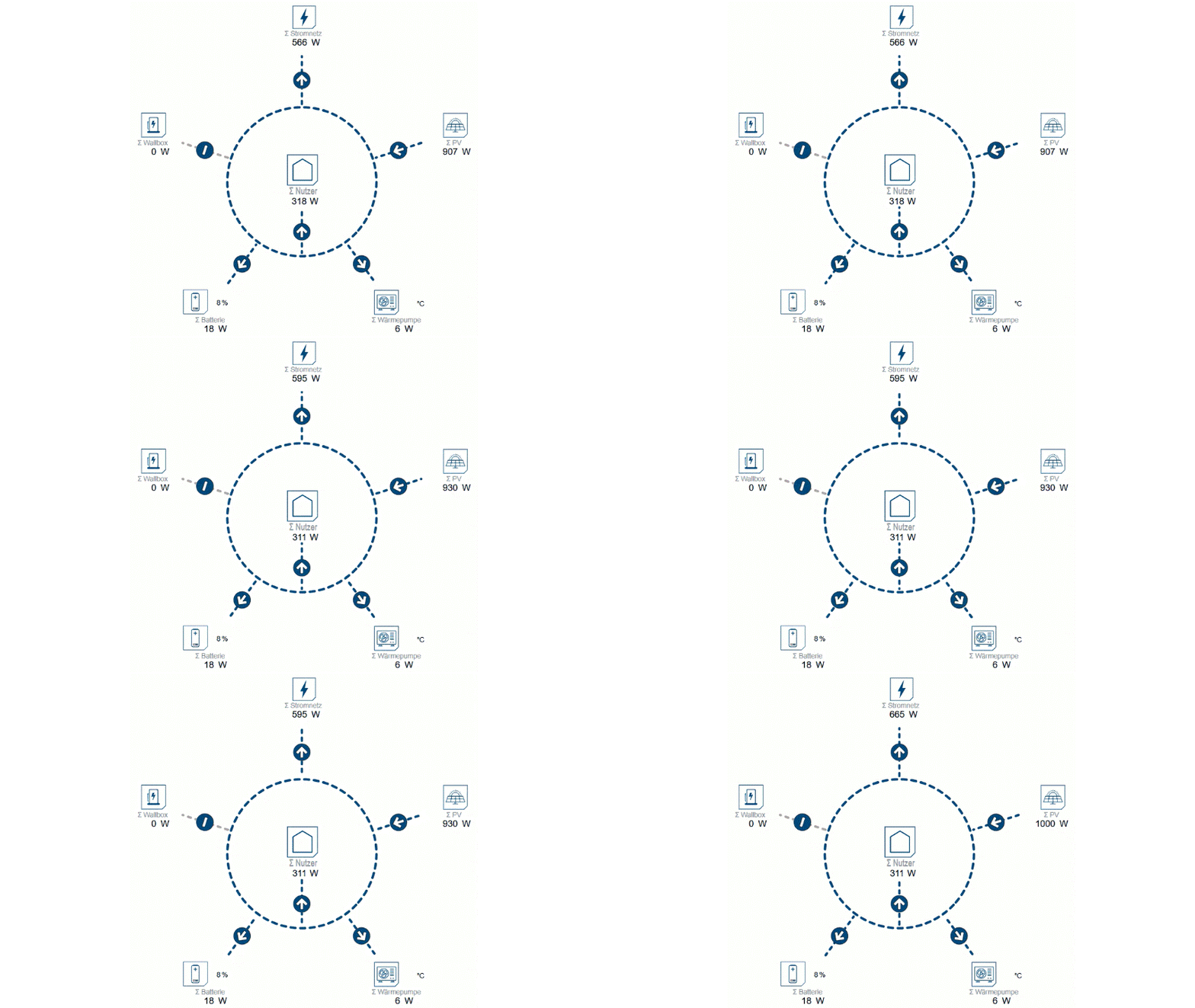
- Monitoring and control of all energy components – from PV and storage to the wallbox
- Intelligent load shifting: electricity is consumed when it is available and cheap
- Use of dynamic electricity tariffs: HEMS recognizes price signals and automatically adjusts consumption
- Feed-in management: Grid-friendly behavior included – §9 EEG and §14a EnWG-compliant
- Transparency: users can see their energy flows at any time via a web dashboard
Why Theben EnergyManager?
Advantages & functions
Theben EnergyManager also solves this problem by optimizing energy flows in real time:
- Self-consumption optimization: Electricity from the PV system is first used by the customer before it is fed into the grid.
- Cost reduction: Dynamic electricity tariffs are analyzed in order to purchase electricity exactly when it is cheapest.
- Energy independence: Battery storage and PV system are optimally controlled to minimize grid consumption.
- Full transparency: Users can see how energy is being consumed and fed in at any time via the app or the web dashboard.
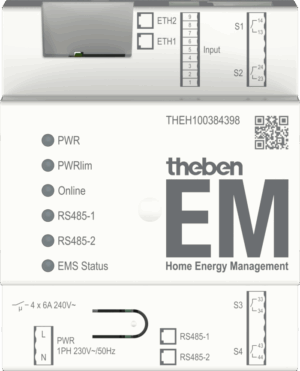
Individual customization &
high compatibility
HEMS is not only intended for new systems, but can also be integrated into existing energy systems.
Thanks to open standards, it can be flexibly adapted to different manufacturers and components.
Inverters: Fronius, SMA, SolarEdge, Huawei, Kostal, GoodWe, etc.
Battery storage: SAX-Power, SMA, etc.
- Note on hybrid inverters: Battery storage systems are integrated via the respective compatible hybrid inverter. If a storage system (e.g., BYD) is listed by the manufacturer as compatible with a supported Compatible with hybrid inverters; it can also be controlled via the Theben HEMS
Wallboxes & Charging Infrastructure: KEBA, Mennekes, Alfen, Walther-Werke, etc.
Smart Meter Gateways: Theben CONEXA and other smart meter solutions (optional)
Our compatibility list includes additional manufacturers.

Photovoltaics, inverters, electricity meters

Batteries

Charging infrastructure

Thermal accumulator & heating rod

Heat pump
Technical data
- Operating voltage: 230 V, -15 %/+6 %, 50 Hz
- Switching capacity: 6 A per channel/240 V AC, cos ϕ = 1
- Switching capacity min: 5 V DC
- Self-consumption: 3 W
- Protection class: II when installed as intended
- Protection class: IP 30 according to EN 60529 (after installation in the corresponding switch cabinet)
- Operating temperature: -5 °C … +45 °C
- Location: dry indoor areas
- Contact type: μ-contact, normally open contact
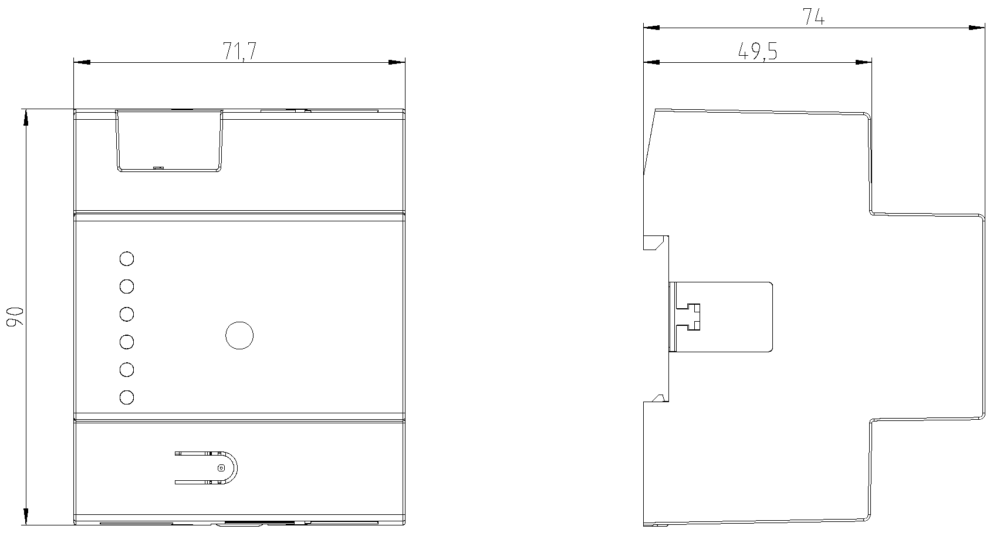
- Dimensions: 90 x 72 x 74 mm